The Barriers You Can’t See
She stood in our classroom holding a pencil for the first time.
Not unsure. Not embarrassed. Just still.
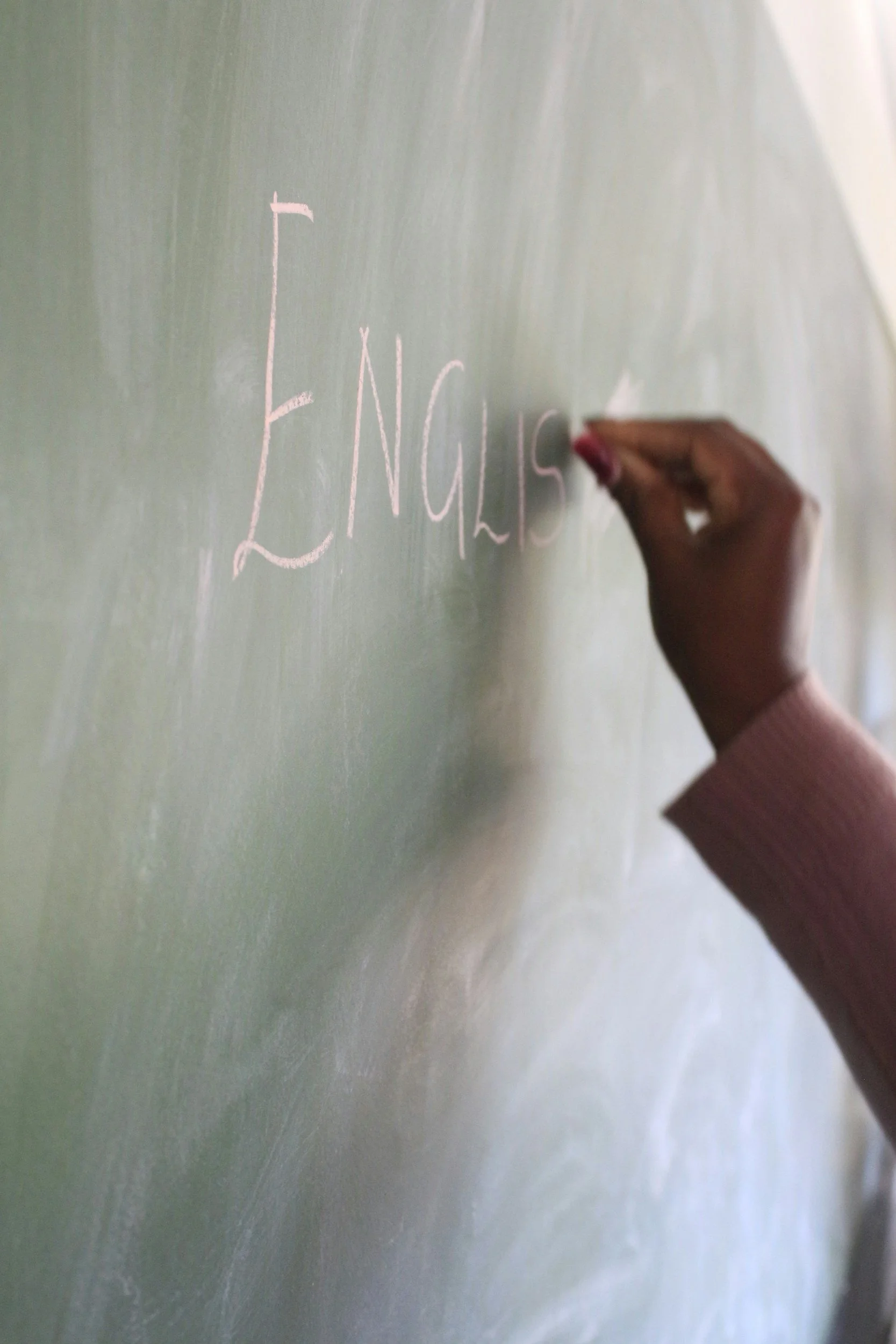
The room was quiet, the kind of quiet that happens when someone is doing something brave. A chalkboard wall stretched across one side of the space, covered with letters written by other women—some careful and practiced, others uneven and tentative. When she lifted her hand and made her first marks, no one rushed her. No one corrected her. We simply stayed.
This is what most people don’t realize about the road forward after trafficking and abuse: the barriers don’t begin aftersafety. They are already there, waiting, long before a woman ever imagines a future for herself.
Many of the women who come to us were never taught to read or write. Education was withheld, restricted, or weaponized. Not because they lacked intelligence or curiosity—but because knowledge gives power, and power threatens control.
Trauma doesn’t just live in memories. It lives in the body. It affects concentration, confidence, and the ability to try something new without fear of failure. Learning—especially learning from the beginning—can feel exposing. Vulnerable. Overwhelming.
And layered on top of that is shame.
Shame whispers that you’re too far behind. That everyone else already knows this. That asking questions will reveal what you’ve been hiding. Shame convinces women that their lack of education is a personal failure, not the result of years of exploitation and deprivation.
Inside the safe house, we see this tension every day.
Mothers sit in our classroom after their children have been safely transported to school—children who are learning quickly, proudly bringing home new words and stories. These women are grateful. Deeply so. They want their children to have opportunities they never did.
And still, there is a quiet ache.
They want to learn too.
Healing and learning happen side by side here. A woman may spend the morning in counseling, unpacking memories her body has carried for years, and the afternoon tracing letters on a chalkboard wall. Both require courage. Both are exhausting in their own way.
This is why education cannot be rushed. And it cannot be separated from dignity.
When traffickers and abusers controlled women, they often used education—or the lack of it—as leverage. Not knowing how to read a document. Not understanding numbers. Not being able to ask for help without fear. These gaps kept women dependent, silent, and easier to manipulate.
In our learning spaces, we work to remove shame first.
We remind women that learning is not a race. That there is no right timeline. That beginning later does not mean beginning less. We celebrate first letters, first words, first moments of confidence—because each one represents something reclaimed.
But even in safety, these barriers are heavy.
Trying to heal while learning foundational skills is hard. Parenting while facing your own gaps is humbling. Carrying hope for your children while rebuilding belief in yourself takes strength most people never have to access.
And sometimes, beneath it all, there is a deeper fear: I don’t think I’m worthy of a miracle. I don’t think things really change for people like me.
This is where community matters. This is where patience matters. This is where faith meets practice.
We believe restoration includes the mind. That God is not ashamed of small beginnings. That learning—slow, steady, supported—is holy work.
Every letter written on that chalkboard wall is a quiet act of resistance. Every woman who chooses to learn is choosing a future less defined by control and more shaped by possibility.
These barriers may be invisible to most. But breaking them is one of the most powerful forms of prevention we know.
And it is a privilege to witness it.